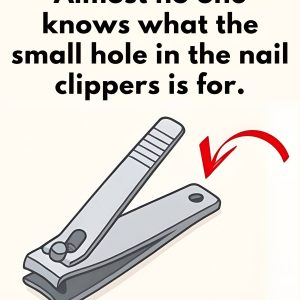
In daily life, we often ignore small design details, like the tiny hole on the lever of nail clippers. It may look decorative, but it has a real purpose tied to both function and history. As the article notes, “this hole actually serves a purposeful function that ties into both practicality and historical design choices.”
Its main role is portability and organization. The hole allows clippers to be attached to a keychain, hook, or ring, helping users avoid losing them. As described, “this simple yet effective design transforms a small, everyday item into something that’s easier to keep track of.”
The hole also has practical secondary uses. For people with limited hand strength or dexterity, it can offer extra leverage. It can also help keep fingernail and toenail clippers together, making storage simpler. These uses show how one small feature can serve multiple needs.
Historically, the design dates back to the late 19th century. At that time, grooming tools were becoming everyday essentials. Nail clippers were once carried like personal accessories, and “the hole allowed them to be attached to a chain or chatelaine,” keeping them close at hand.
Even as clippers evolved to include extras like files or bottle openers, this feature stayed. Its survival reflects “a design philosophy focused on long-term user satisfaction rather than novelty or trend,” proving that thoughtful design often lasts the longest.