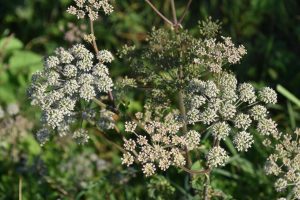
The scariest plant I had ever encountered was poison ivy, until a hike led me to a field of delicate white flowers that my friend quickly identified as poison hemlock. Although it looked beautiful and harmless, this plant is extremely dangerous. Known scientifically as *Conium maculatum*, poison hemlock belongs to the carrot family and commonly grows along roadsides, fields, ditches, and neglected areas. It can reach 6 to 10 feet tall, with small white flowers arranged in umbrella-shaped clusters.
Every part of poison hemlock, including its leaves, stems, flowers, and roots, contains dangerous toxins. The plant is believed to have been used to poison the ancient Greek philosopher Socrates. Eating it can cause serious symptoms, including shaking, excessive salivation, paralysis, seizures, breathing difficulties, and even death.
Poison hemlock is often mistaken for harmless plants such as Queen Anne’s lace and wild parsley. However, several features can help identify it. Look for its tall stems, bright green fern-like leaves, and distinctive purple or reddish blotches along the stems. Its crushed leaves may also produce an unpleasant, musty smell.
Avoid touching or handling poison hemlock, as contact may cause skin irritation, rashes, or blisters. Toxic substances can also enter the body if contaminated hands touch the eyes or mouth. Never attempt to remove or burn the plant without proper protective equipment.
If you encounter a plant that looks like poison hemlock, keep your distance and avoid smelling or touching it. Take a photograph and contact a local plant expert for identification. Its beautiful flowers can easily fool people, but recognizing the warning signs could prevent a dangerous encounter.