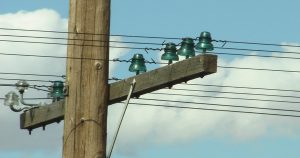
High above streets and fields, small curved objects once played an important role in early communication and electrical systems. These objects, known as insulators, were designed to support overhead wires while preventing electrical signals from escaping into their supporting structures.
Their shapes and strengths varied depending on their purpose. Often made from glass or porcelain, they were built to withstand different conditions and electrical demands while keeping wires safely separated from poles.
Smaller versions were commonly used on early telephone and telegraph lines, helping messages travel across long distances without losing their signals. Larger and stronger models handled heavier electrical loads, providing reliable protection for power lines.
As technology advanced, many overhead communication and electrical lines were removed or buried underground. Thousands of these old insulators were discarded, while others were saved by people who recognized their historical importance.
Today, surviving examples have become popular among collectors because of their unusual shapes, colors, and connection to the history of communication. Some older and rarer pieces are now considered valuable collectibles, making these once-ordinary objects surprisingly sought after.