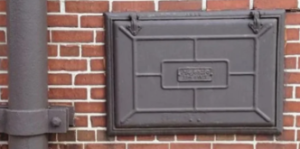
For decades, a small rusty hatch built into the side of a house served an important purpose. It was more than just an opening in the wall—it helped families survive freezing winters by making it easier to deliver coal directly into their basements, where it was stored for heating.
Coal chute doors were common in older homes, especially in cities where coal-powered furnaces kept houses warm. Delivery workers would stand outside in the cold, shovel or slide heavy coal through the opening, and send it straight into a basement storage bin without carrying it through the house. This simple design saved time, effort, and kept much of the mess outside.
Before modern heating systems became widespread, coal was a household necessity. Families depended on regular deliveries to stay warm, and these small metal doors played an important role in everyday life. Although the work was exhausting and dirty, the system made storing fuel much easier during the harsh winter months.
Today, many coal chute doors have been sealed, covered, or forgotten. Some remain visible on older buildings, serving as reminders of a time when heating a home required physical labor and careful planning. What once seemed like an ordinary piece of hardware now tells a story of survival, changing technology, and how much everyday life has evolved.