Red patches or bumps on the skin are often dismissed as minor, but when combined with breathing issues, they can be dangerous. “Skin reactions are often dismissed as minor problems… when these skin symptoms appear together with breathing difficulty, the situation can become dangerous very quickly.” This combination may signal anaphylaxis, a severe allergic reaction requiring immediate attention.
The red, raised patches are usually hives (urticaria). They are “swollen, irregular red or pink welts,” often itchy or burning, and can appear suddenly. Hives alone may be harmless, but with breathing problems, they indicate a serious systemic reaction.
Watch for emergency signs: shortness of breath, wheezing, tightness in the throat or chest, swelling of lips, tongue, or face, rapid heartbeat, dizziness, or fainting. If these appear with hives, treat it as a medical emergency.
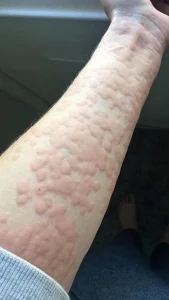
Severe reactions can be triggered by foods like peanuts, shellfish, milk, or eggs; medications such as antibiotics or pain relievers; insect stings; latex; or environmental allergens. “Sometimes people are aware of their allergies. In other cases, this may be the first time symptoms appear.”
Never assume “It’s just a rash” or “It will go away on its own.” Once breathing is affected, the situation can worsen quickly, leading to airway blockage, shock, or loss of consciousness. Immediate steps include calling emergency services, using an epinephrine auto-injector if available, keeping the person lying down, and monitoring until help arrives.
Not all rashes are dangerous—mild allergies, irritations, infections, or chronic hives may look similar—but breathing difficulty is the critical difference. “Red patches on the skin plus breathing difficulty should never be ignored.” Early recognition and fast action can save a life.