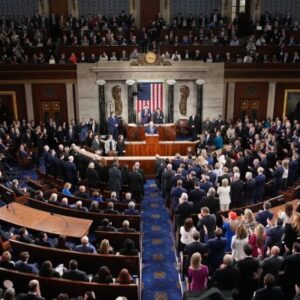
The U.S. House of Representatives narrowly approved the SPEED Act in a 218–213 vote, advancing legislation designed to speed up artificial intelligence development by expanding data centers and energy infrastructure. Supporters describe the measure as essential for winning the global AI race, arguing that America must move faster to compete with China and strengthen national security through advanced computing capabilities.
The bill would streamline permits for large AI facilities and power projects by reducing regulatory delays. Backers say the changes are necessary to provide the electricity and computing resources required for next-generation AI systems, military technology, and economic growth. They present the effort as a strategic investment to secure U.S. technological leadership.
Critics, however, argue the proposal weakens environmental protections by prioritizing rapid industrial expansion over climate safeguards. They warn that easing restrictions could favor fossil fuel energy production while allowing major technology companies to expand with fewer regulatory obstacles. Opponents believe the legislation shifts the balance away from environmental oversight in pursuit of faster development.
The proposal also includes plans for a U.S. Tech Force that would strengthen cooperation between federal agencies and Silicon Valley companies through talent exchanges, policy coordination, and infrastructure planning. Critics fear this could concentrate influence among government officials and a small number of powerful corporations, raising concerns about transparency, accountability, and regulatory capture.
At its core, the debate asks whether expanding AI infrastructure will improve America’s competitiveness or create long-term environmental and governance risks. As supporters call the measure necessary to maintain U.S. leadership in artificial intelligence, opponents caution that the costs may outweigh the benefits. The legislation now moves to the Senate, where its provisions could be revised, expanded, or rejected, shaping the country’s future AI strategy and the trade-offs it is willing to accept. “The race to outpace China in artificial intelligence development” and “accelerate permits for massive data centers and energy infrastructure” remain central arguments driving the debate.