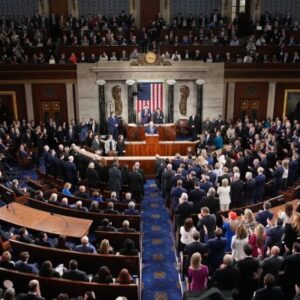
The Supreme Court of the United States has issued an 8–1 ruling that delivers a major immigration victory to Donald Trump, narrowing protections for Venezuelan migrants living in the country under Temporary Protected Status (TPS). The decision **”struck down a lower court injunction that had blocked changes to the program,”** allowing the government to proceed with policy shifts affecting the program.
TPS is designed to let people from crisis-affected countries live and work in the U.S. The Court ruled that it is mainly **”a tool of foreign policy discretion rather than a guaranteed humanitarian safeguard,”** reinforcing federal authority over immigration decisions. As a result, protections for roughly 300,000 Venezuelans could be ended.
The ruling has serious consequences for migrants who have built long-term lives in the United States. Many have spent years working, raising families, and integrating into communities, all while relying on TPS for stability. The decision now places their legal status in uncertainty and could lead to expanded deportation efforts if protections expire.
Supporters argue the decision restores presidential control over immigration policy and reinforces national sovereignty. They maintain that TPS was never intended to provide permanent residency and should remain subject to executive discretion.
Critics warn of severe human consequences, including family separation and disruption of communities. A dissenting justice also cautioned about the impact of abruptly ending protections. The Department of Homeland Security, led by Kristi Noem, says the policy aligns with national interests, but the ruling has sparked a broader debate over immigration authority and humanitarian responsibility in the United States.