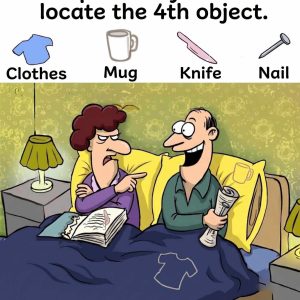
Visual puzzles remain popular because they reveal how the brain filters information. At first glance, the image of an elderly couple sitting in bed looks simple and ordinary, with “warm blankets, bedside lamps, furniture, and relaxed expressions” drawing attention to the overall scene instead of smaller details. But the real challenge is to find four hidden objects: a lamp, a comb, a nail, and a pill. While this sounds easy, many people quickly realize the puzzle is far more difficult than expected because the brain naturally overlooks subtle details hidden in plain sight.
The lamps are usually the easiest to notice because they naturally belong in a bedroom scene. The comb is also easier since its shape stands out near the foot of the bed. These early discoveries create confidence, but the search becomes harder with the nail and especially the pill. The nail often blends into furniture lines or background patterns, while the pill is disguised so carefully that “the eye least expects to find” it. The challenge is less about eyesight and more about patience and resisting assumptions.
What makes these puzzles fascinating is the psychology behind them. Human vision is not “a perfect recording device like a camera.” Instead, the brain uses shortcuts based on memory and expectation. This process, called selective attention, helps people focus in daily life, but it also creates blind spots. People may stare directly at an object several times without recognizing it because “seeing is not always the same as noticing.”
Hidden-object puzzles may also support concentration, memory, and problem-solving skills. In a world of fast scrolling and distractions, they encourage people to slow down and focus carefully. Solving them creates satisfaction because the brain enjoys finally recognizing what it previously missed.
In the end, these puzzles remind us that important details are often overlooked when attention is rushed. The joy comes not from proving how much we see, but from discovering “how much we almost missed.”